Multi-ethnic
Cross Bronx Expressway
Robert Moses cut a seven-mile expressway through East Tremont, Morrisania, Crotona Park East, and Highbridge between 1948 and 1972. Approximately 60,000 residents lost their homes. The East Tremont fight shaped a generation of urban-renewal resistance.
1948–1973
The stakes
Seven miles of roadway cost approximately 60,000 people their homes. The figure covers the full Cross Bronx Expressway corridor from the George Washington Bridge at the Harlem River to the Bruckner Interchange near the East River, and it runs across roughly a quarter century of construction, from the first contracts in 1948 to the final Bruckner link in 1972.12 The families who lost apartments in the path of the expressway came from East Tremont, Morrisania, Crotona Park East, Highbridge, and the blocks around the Grand Concourse. They were Jewish, Puerto Rican, Black, Italian, and Irish. They lived in rent-controlled apartments, in walk-up tenements, and in small row houses. The City of New York delivered many of them ninety days of notice to vacate, and the relocation payment seldom covered the cost of moving to an equivalent apartment in another neighborhood.23
Robert Moses directed the route. In 1946 he chose a line that cut through the dense tenement blocks of East Tremont, in preference to an alternative along the Crotona Park corridor that engineers and residents showed to be shorter, cheaper, and less destructive of housing. The East Tremont residents fought the route for five years. They lost. Robert Caro’s 1974 biography of Moses, The Power Broker, reconstructed the East Tremont case family by family, and the two chapters he devoted to what he called “one mile” remain the most detailed account of a single urban-renewal fight in the American twentieth-century record.24
The damage did not end when the last truck rolled through the finished trench. The South Bronx burn-down of the 1970s ran through neighborhoods the expressway had already cut in half. Property values along the corridor collapsed. Insurance companies redlined the blocks. Landlords set their own buildings on fire. The connection between the expressway and the fires is contested in its direct causal chain, and careful historians have warned against reading the one as the simple cause of the other, but no serious account of the South Bronx in the 1970s has been written without the expressway in the frame.56
The community response is a parallel record. The East Tremont Neighborhood Association, founded by the housewife Lillian Edelstein in 1952, mounted one of the earliest sustained neighborhood fights against a Moses project.78 The Bronx River Working Group convened in 1997 and incorporated as the Bronx River Alliance in 2001, and the Alliance has led the reclamation of the Bronx River corridor through thirty years of organizing.910 The Reimagine the Cross Bronx Expressway study, which the City of New York and the State of New York released in final form in March 2025, carries the first serious proposal to cap portions of the trench and partially reconnect the neighborhoods the road divided.1112
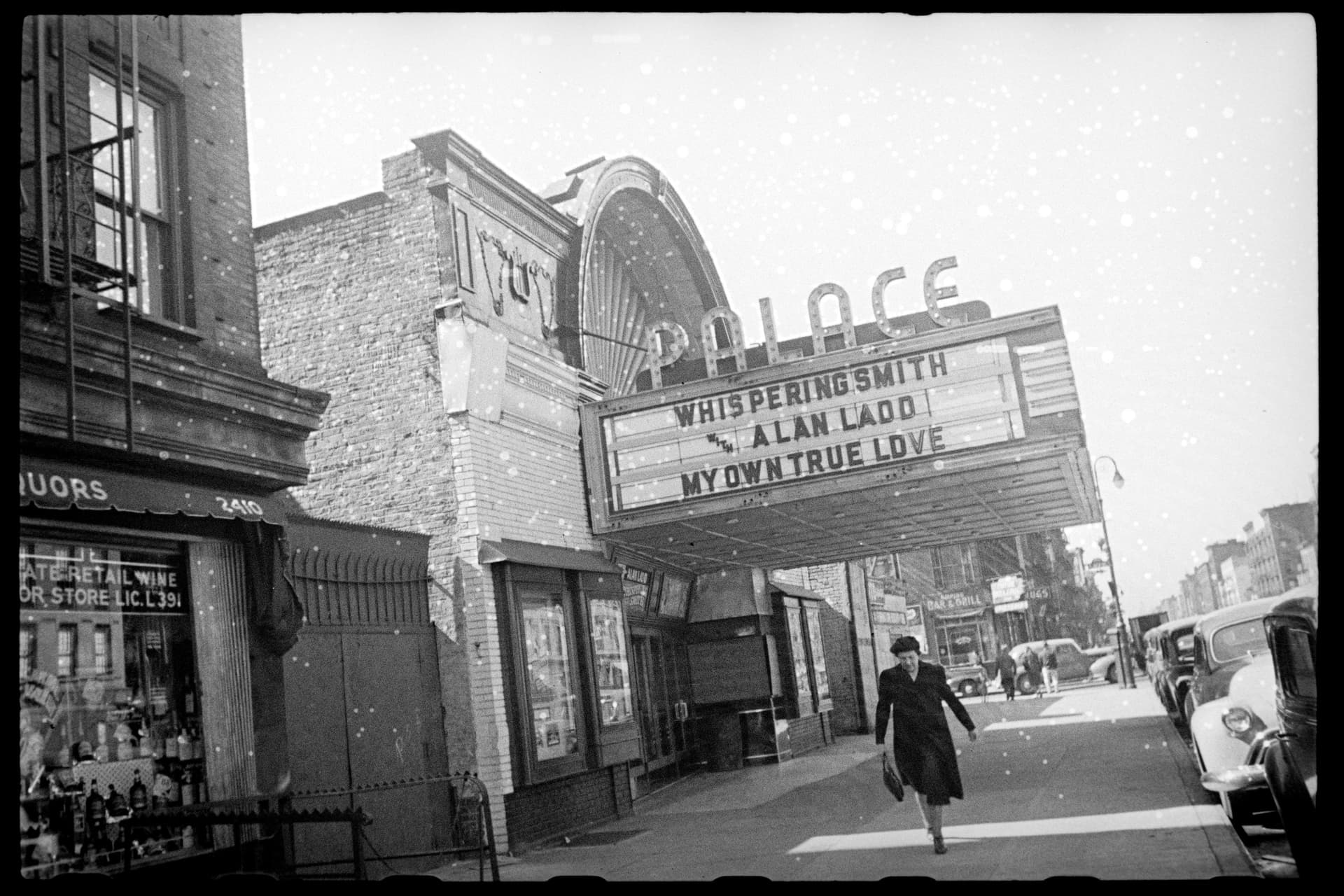
The route and the choice
The Cross Bronx Expressway runs seven miles. It carries Interstate 95, Interstate 295, and United States Route 1 across the Bronx from the eastern approach of the George Washington Bridge at the Harlem River to the Bruckner Interchange near the East River.113 The corridor crosses four Bronx communities that the expressway planning studies of the 1940s called East Tremont, Morrisania, Crotona Park East, and Highbridge. The right-of-way averages around 225 feet wide at the trench and widens at the interchanges. The expressway passes under the Grand Concourse, over the Bronx River, and through a rock cut at the Grand Concourse ridge that planners at the New York State Department of Public Works treated as the single hardest construction problem on the line.13
Moses first proposed the corridor in 1944 as part of the postwar arterial program the Triborough Bridge and Tunnel Authority developed in anticipation of federal highway money. He directed the East Tremont route in 1946.2 The first construction contracts went out in 1948, and the first segment, between the Bronx River and Schuylerville in the eastern Bronx, proceeded first because the right-of-way there ran through the lightest residential density.1
The alternative the East Tremont residents proposed ran two blocks south. A route along the southern edge of Crotona Park would have taken park land, not tenements. The residents paid for their own engineering study. The engineer they hired, a recent retiree from the New York State Department of Public Works, found the Crotona Park route to be shorter by several hundred feet, cheaper to build, and less disruptive to housing. Caro reproduced the engineering comparison in The Power Broker and traced how Moses refused to hear it.24 The Crotona Park alternative required the taking of a single, primarily Irish-American parish block and a strip of park edge. The East Tremont route required the taking of an entire Jewish-American, Italian-American, and Black working-class tenement district.2 Moses approved the East Tremont line.
The approval ran through the Board of Estimate and the City Planning Commission in 1953 after five years of public hearings. Caro recorded that the final hearing lasted several minutes. The East Tremont residents, led by Lillian Edelstein, walked out in protest when the chair refused to put the alternative route on the agenda. In the residents’ absence the commission approved Moses’s line.23
East Tremont and the one mile
The one mile of expressway through East Tremont, between the Grand Concourse and the Bronx River, is the most documented urban-renewal displacement in the American record. The neighborhood held five- and six-story walk-up apartment houses built mostly between 1910 and 1925 for the Jewish garment workers and their children who had moved north out of the Lower East Side. By 1950 the tenant population was roughly eighty-two percent white and majority Jewish, with the remaining eighteen percent composed of African-American, Puerto Rican, and Italian-American households.142
The city began issuing vacate notices in East Tremont in late 1952. The notices gave ninety days. The compensation schedule the Triborough Bridge and Tunnel Authority published set moving expenses at a fixed amount that did not meet the cost of transporting a family’s furniture across the borough. Relocation assistance, where the city offered it at all, pointed tenants to public housing waiting lists that ran to several thousand families.23
The sources disagree on how many families the East Tremont section displaced. Caro’s original reporting produced a count of approximately 1,530 families for the one-mile section, a figure he reconstructed from the Bronx tax rolls and the Triborough relocation files. Later accounts have put the East Tremont count as low as about 1,400 households, and popular summaries sometimes cite 5,000 residents across the five years of construction for that section alone.2143 The 5,000 figure, if one assumes an average household size of three to three and a half people, produces roughly the same family count as Caro’s original number and is compatible with it rather than contradictory. The Urban Renewal Atlas reports the East Tremont displacement as approximately 1,500 families, or approximately 5,000 residents, for the one-mile section between the Grand Concourse and the Bronx River.
Lillian Edelstein organized the East Tremont Neighborhood Association in early 1952. She was thirty-eight years old, she lived at 867 East 176th Street with her husband and daughter, and she had no prior organizing experience. Within eight months she had built an association of several thousand members, raised ten thousand dollars for legal counsel and an independent engineering review, and secured the endorsement of Bronx Borough President James Lyons.78 Edelstein’s association held rallies at the Tremont Temple, circulated petitions, testified before the Board of Estimate, and commissioned the engineering study of the Crotona Park alternative. Caro’s narrative in The Power Broker turns on Edelstein, and the Jewish Women’s Archive, the Forward, and the New York Public Library’s oral-history collections have preserved her papers and her testimony.78
The association lost. The Board of Estimate approved Moses’s route in December 1953. The vacate notices went out in waves through 1954 and 1955. The East Tremont section opened to traffic in segments between 1955 and 1963.12
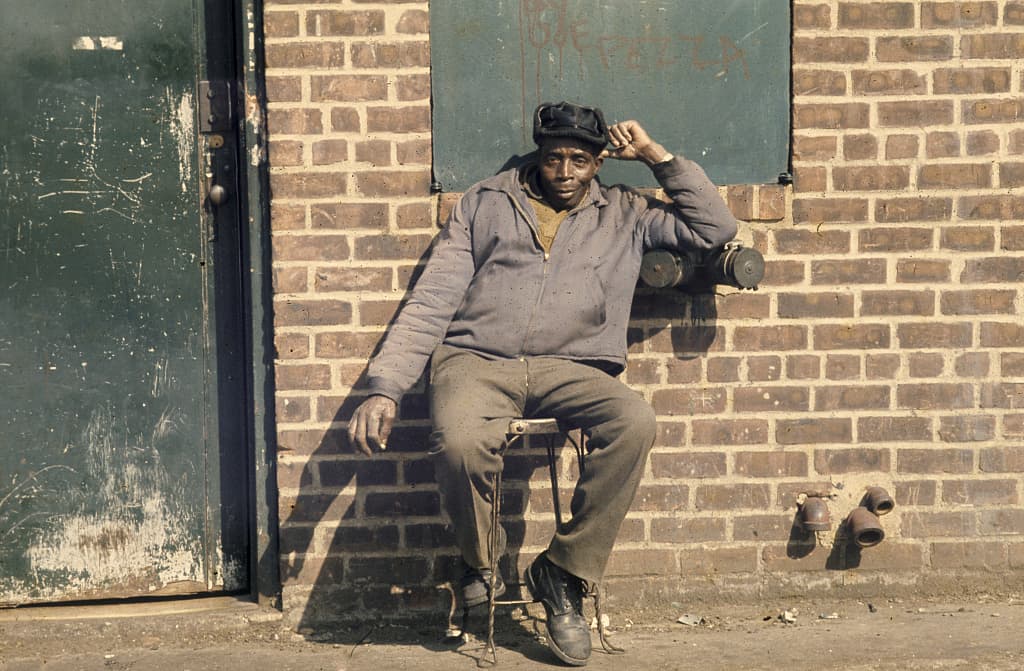
Morrisania, Crotona Park East, Highbridge
West and east of East Tremont the expressway cut through neighborhoods whose residents had, if anything, fewer options than the East Tremont tenants. Morrisania, in the south-central Bronx, held one of the largest African-American communities in the borough by 1950 and a rapidly growing Puerto Rican population. Crotona Park East, just north of Morrisania, was mixed Puerto Rican, Black, and Jewish-American. Highbridge, on the Harlem River bluffs at the western end of the expressway, held an Irish-American and increasingly Puerto Rican population in tenements that stepped down the slope toward the river.1516
The documentary record in these neighborhoods is thinner than the record for East Tremont. No single organizer of Edelstein’s visibility emerged in Morrisania or Highbridge, and Caro’s reporting, which ran to two full chapters on East Tremont, did not extend with the same depth into the neighborhoods further east and west. The NYC Municipal Archives holds the Triborough relocation files for the full corridor, and the Housing and Preservation Department’s survey photography from the 1950s covers most of the right-of-way block by block, but no one has performed the family-by-family reconstruction for Morrisania or Highbridge that The Power Broker performed for East Tremont.1718
What the surviving record shows is that the displacement in Morrisania, Crotona Park East, and Highbridge fell harder, per household, on families with less capital and fewer housing options than the East Tremont tenants. The Black and Puerto Rican residents of Morrisania faced a segregated housing market that excluded them from most of the neighborhoods the East Tremont Jewish families moved into after 1955. Puerto Rican families, many of whom had arrived in New York after 1945, held no accumulated property. The Federal Housing Administration mortgage program shut Black families out of most of the outer borough and Westchester County neighborhoods to which the displaced East Tremont households relocated.1619
The Cross Bronx Expressway, in short, displaced residents of every major community it crossed, and the Puerto Rican and Black residents of Morrisania, Crotona Park East, and Highbridge had the fewest places to go. The same segregated postwar housing market that routed Federal Housing Administration dollars away from these neighborhoods now routed the displaced residents back into the remaining Bronx tenements, into overcrowded public housing, and, in a pattern Themis Chronopoulos has documented in Spatial Regulation in New York City, into the blocks the city itself abandoned across the following two decades.19
The Morrisania displacement included the blocks around Third Avenue and East 174th Street that had served as the commercial spine of the Black Bronx since the late 1930s. The Apollo Theater on Third Avenue, unrelated to the Harlem Apollo but a similarly important venue for Black performers on the Bronx circuit, sat just south of the expressway’s footprint and lost most of its audience when the corridor cut the neighborhood grid. The Puerto Rican social clubs along Prospect Avenue, the storefront Pentecostal churches, and the bodegas along Boston Road that had grown up to serve the post-1945 Puerto Rican migration all absorbed a share of the damage.1615 Highbridge lost a similar cluster of Irish-American bars and Puerto Rican groceries along 170th Street near the river bluff. The block-by-block losses did not produce an Edelstein, but they produced, across the two decades that followed, the conditions for the community organizations that would reclaim the corridor from below.
The Cross Bronx Expressway runs from the George Washington Bridge east to the Bruckner Interchange. In 1946 Robert Moses chose a route through East Tremont in preference to a shorter and cheaper line along the Crotona Park corridor that would have displaced far fewer residents. Construction ran from 1948 through 1972, with the contested East Tremont section built between 1952 and 1963. Roughly 60,000 people lost their homes across the full route. The expressway displaced Jewish-American, Puerto Rican, African-American, and Italian families, and the Puerto Rican and Black residents of Morrisania and Highbridge had fewer places to go. The map carries the 1950 block geography, the right-of-way footprint, and the neighborhoods the expressway left behind.
The map shows Cross Bronx corridor coverage, East Tremont tenement district, pre-1955, Morrisania, pre-expressway, Highbridge, pre-expressway, Cross Bronx Expressway, I-95, 1948 to 1972, and Bronx River Greenway, Bronx River Alliance.
- Cross Bronx corridor coverage
- East Tremont tenement district, pre-1955
- Morrisania, pre-expressway
- Highbridge, pre-expressway
- Cross Bronx Expressway, I-95, 1948 to 1972
- Bronx River Greenway, Bronx River Alliance
Urban Renewal Atlas, illustrative coverage.; Approximate extent of the Jewish, Italian, Black, and Puerto Rican tenement district.; Approximate extent of the Black and Puerto Rican community.; Approximate extent of the Irish-American and Puerto Rican Harlem River bluff blocks.; Interstate 95 alignment through the Bronx.; Bronx River Greenway, Kensico Dam to Soundview Park..
The burn-down years and the contested causal chain
The South Bronx burned through the 1970s. The 1970s South Bronx building fires, as the historical record has come to call them, destroyed approximately eighty percent of the residential buildings in an area that ran from Mott Haven north through Morrisania and into parts of East Tremont. Fire companies in the affected precincts responded, at peak, to around forty fires a day and night. Arsonists set most of the fires. Landlords who could no longer sell their buildings set a significant share of them and collected the insurance on the ruins.520
The causal chain between the Cross Bronx Expressway and the South Bronx fires is contested. The sociologist Rodrick Wallace argued in the 1980s and 1990s that the city’s deliberate withdrawal of fire services from the South Bronx, which the city pursued under the planned-shrinkage policy that Housing and Development Administrator Roger Starr promoted in 1976, produced the cascade of fires as a municipal-service failure.5 Other accounts have emphasized the role of the Federal Housing Administration’s Section 235 and Section 223(e) insurance programs, which gave landlords a market for burned property, and the redlining practices the Home Owners’ Loan Corporation had entrenched in the area beginning in the 1930s.20
The expressway does not appear in these accounts as a single proximate cause. It appears, rather, as a structural condition. The expressway’s construction cut the blocks north and south of its trench apart from one another, collapsed the property values along a half-mile band on each side, accelerated the white flight that had already begun in East Tremont, and concentrated the remaining Puerto Rican and Black residents in the blocks most vulnerable to the landlord-arson economy that emerged in the 1970s. The Ballon and Jackson volume, Robert Moses and the Modern City, published in 2007, treats the expressway as one of a cluster of Moses-era projects that produced the conditions for the fires without serving as the single cause.6 The historian Evelyn Gonzalez, in The Bronx, and Jill Jonnes, in South Bronx Rising, reach similar conclusions.2122
The careful position, and the one the documentary record supports, is that the expressway did not burn the Bronx but that the Bronx could not have burned in the way it did without the expressway. Every major account of the fires places the expressway in the frame. No account places the expressway at the center.
Resistance, recovery, and the river
The community response to the expressway ran through three generations. The first generation was Edelstein’s. The East Tremont Neighborhood Association fought the route from 1952 to 1953, lost, and dissolved shortly after. Edelstein herself relocated with her family to Co-op City in the northeast Bronx when it opened in 1968, and she gave the papers of the association to the New York Public Library.78 The association’s fight, though it failed, became the template for every Bronx neighborhood that later organized against a Moses-era project, and Caro’s account, published in 1974, transferred the template into the national urban-planning canon.2
The second generation was environmental. Ruth Anderberg founded the Bronx River Restoration Project in 1974, and the project began the long work of pulling abandoned cars, refrigerators, and construction debris out of the Bronx River.923 Anderberg’s organization ran through the 1980s and 1990s on volunteer labor and small Parks Department grants. In 1997 the New York City Parks Department’s Partnerships for Parks program convened the Bronx River Working Group, which brought together more than sixty community organizations, public agencies, and businesses around the shared work of reclaiming the river.9 THE POINT Community Development Corporation in Hunts Point, Youth Ministries for Peace and Justice in the South Bronx, and the City Parks Foundation were among the founding members of the working group.9 The working group incorporated as the Bronx River Alliance in 2001.
The Alliance’s work runs across three linked programs. The Ecology Team restores the riverbank and the salt-marsh estuary at the river’s mouth. The Greenway Team has built, as of 2026, most of a planned twenty-three-mile continuous greenway from the Kensico Dam in Westchester County south to Soundview Park in the Bronx. The Education Team runs youth science and stewardship programs from the Bronx River House, the Alliance’s headquarters at Starlight Park in West Farms.109 The Alliance has reintroduced the alewife fish run to the lower river, restored tidal wetlands at Soundview, and, in partnership with the City Parks Foundation and the New York City Department of Environmental Protection, brought the river’s water quality back to levels that now support aquatic life across most of its length.10
The connection between the expressway and the river runs deeper than adjacency. The expressway crosses the Bronx River at West Farms, and the right-of-way for a century has cut the river off from the neighborhoods on either side. The Alliance has pressed, through its Greenway Team, for the kind of at-grade reconnections the Reimagine study now proposes, and the two planning efforts have increasingly converged. Starlight Park, which the Alliance and the Parks Department reopened in 2013 after a twenty-year restoration, now sits at the junction of the river greenway and the expressway cap study area. Any cap built over the expressway between the Cross Bronx and the Bronx River would tie directly into the greenway on both banks and restore a continuous north-south pedestrian and bicycle connection for the first time since the 1950s.1011
The third generation is the current fight over the expressway itself. The Reimagine the Cross Bronx Expressway study, which a two-million-dollar federal Rebuilding American Infrastructure with Sustainability and Equity grant funded and which the New York City Department of Transportation led in partnership with the New York State Department of Transportation, the New York City Department of City Planning, and the New York City Department of Health and Mental Hygiene, ran from 2022 through its final-vision release in March 2025.1112 The study worked with a community-partner consortium that included the Bronx River Alliance, South Bronx Unite, Loving the Bronx, The Bronx Is Blooming, and several block associations along the expressway corridor. The final vision proposes a phased set of interventions: near-term traffic-safety and street-grid reconnection work, mid-term bike and transit corridor investments, and long-term capping of portions of the expressway trench with a deck that would carry public open space, bike routes, and pedestrian connections across the highway.11
The cap proposals draw on the precedent of Klyde Warren Park over Woodall Rodgers Freeway in Dallas and the Rose Kennedy Greenway in Boston, with adjustments for the depth and width of the Cross Bronx trench. The most thoroughly developed cap concept covers the segment between the Grand Concourse and Webster Avenue in Mount Hope, a stretch that sits in an open trench and would be technically feasible to deck without major structural reconstruction of the roadway itself. The city has not secured construction funding for any cap segment as of this writing. The community organizations continue to press for it.1124
The living record
The documentary record of the Cross Bronx Expressway is unusually complete, for a project of its destruction. The NYC Municipal Archives holds the Triborough Bridge and Tunnel Authority records, the Housing and Preservation Department relocation files, and the block-by-block survey photography the city commissioned between 1939 and 1941 and again in 1983 through 1988.17 The New York Public Library holds the Lillian Edelstein papers and the East Tremont Neighborhood Association records. The New York Public Library Digital Collections carry a substantial subset of the tax photographs from the 1940s and 1980s surveys, including most of the block faces the expressway demolished.18 Robert Caro’s reporting files, which the New-York Historical Society has held since 2018, contain the original interview notes and document photocopies Caro used to build the East Tremont narrative in The Power Broker.2
The scholarly record is also substantial. Caro’s 1974 biography remains the single most thorough account. Hilary Ballon and Kenneth T. Jackson’s edited volume Robert Moses and the Modern City, published in 2007 in conjunction with the Queens Museum exhibition of the same name, provides the fullest revisionist engagement with Caro’s argument and reproduces the Cross Bronx construction photography that the Triborough authority archived during the 1950s.6 Themis Chronopoulos’s Spatial Regulation in New York City, published by Routledge in 2011, situates the expressway within the six-decade continuum of municipal urban policy.19 Evelyn Gonzalez’s The Bronx, published by Columbia University Press in 2004, and Jill Jonnes’s South Bronx Rising, published by Fordham University Press in 2002, provide the neighborhood-scale context the Moses-focused accounts tend to miss.2122
The organizational record lives in the present-day work of the Bronx River Alliance, South Bronx Unite, Nos Quedamos, the Point Community Development Corporation, and Youth Ministries for Peace and Justice. These organizations carry, among them, the oral-history collections, the community-planning memory, the block-association records, and the legal and policy expertise the expressway generation and the burn-down generation accumulated.910 The Reimagine the Cross Bronx study drew its community-planning work from that record. Any future cap-and-reconnect project on the corridor will draw from it too.
The parallels to active fights elsewhere are direct. The Claiborne Expressway cap proposal in New Orleans, the Inner Loop removal in Rochester, the Interstate 81 viaduct demolition in Syracuse, and the Kensington Expressway cap in Buffalo all draw on the same organizing and planning templates that the East Tremont Neighborhood Association first built and that the Bronx River Alliance and the Reimagine partners have now extended. Community-led traffic and air-quality data collection, independent engineering review, sustained pressure through the public-hearing calendar, and coalitions across block associations, environmental-justice organizations, and public-health groups form the shared method. The Cross Bronx corridor is one of the most studied cases in the national record precisely because Caro’s reporting, the Alliance’s archive, and the Reimagine study together produce an uncommonly complete dataset on how a mid-century urban expressway damaged a neighborhood and how a neighborhood can organize to reclaim what the expressway took.
The road is still there. The trench still cuts East Tremont from Morrisania, Crotona Park East from Belmont, Highbridge from Morris Heights. The air pollution along the corridor remains among the highest in New York City, and the asthma rates in the schools along the right-of-way run at several times the city median.24 The sixty thousand residents the expressway displaced between 1948 and 1972 are not coming home. The record of who they were, what they lost, and how they organized to resist is in public hands. The organizations that carry it forward are in public view. The work of reconnecting the neighborhoods the expressway divided has begun.
Footnotes
-
Cross Bronx Expressway, Wikipedia. https://en.wikipedia.org/wiki/Cross_Bronx_Expressway ↩ ↩2 ↩3 ↩4
-
Robert A. Caro, The Power Broker: Robert Moses and the Fall of New York, Alfred A. Knopf, 1974. The East Tremont material runs through chapters 37 and 38, titled “One Mile” and “One Mile (Afterward).” ↩ ↩2 ↩3 ↩4 ↩5 ↩6 ↩7 ↩8 ↩9 ↩10 ↩11 ↩12 ↩13
-
Environmental Justice History, “A Split City: The Cross Bronx Expressway.” https://ejhistory.com/cross-bronx-expressway/ ↩ ↩2 ↩3 ↩4
-
Professor Nerdster, “Power Broker by Robert Caro: Summary and Analysis of Chapter 37.” https://professornerdster.com/power-broker-by-robert-caro-summary-analysis-of-chapter-37/ ↩ ↩2
-
1970s South Bronx building fires, Wikipedia. https://en.wikipedia.org/wiki/1970s_South_Bronx_building_fires ↩ ↩2 ↩3
-
Hilary Ballon and Kenneth T. Jackson, eds., Robert Moses and the Modern City: The Transformation of New York, W. W. Norton, 2007. ↩ ↩2 ↩3
-
Jewish Women’s Archive, “An Urban Activist: Lillian Edelstein.” https://jwa.org/blog/urbanactivist ↩ ↩2 ↩3 ↩4
-
“The Forgotten Heroine,” The Forward. https://forward.com/culture/1052/the-forgotten-heroine/ ↩ ↩2 ↩3 ↩4
-
Bronx River Alliance, “History.” https://bronxriver.org/about2/history ↩ ↩2 ↩3 ↩4 ↩5 ↩6
-
Bronx River Alliance, Wikipedia. https://en.wikipedia.org/wiki/Bronx_River_Alliance ↩ ↩2 ↩3 ↩4 ↩5
-
New York City Department of Transportation, “City, State Release Final Report to Reconnect Communities Divided by Cross Bronx Expressway,” March 2025. https://www.nyc.gov/html/dot/html/pr2025/final-report-reconnect-communities-cbe.shtml ↩ ↩2 ↩3 ↩4 ↩5
-
Gothamist, “NYC Launches $2 Million Study to ‘Reimagine’ the Cross-Bronx Expressway.” https://gothamist.com/news/nyc-launches-2-million-study-to-reimagine-the-cross-bronx-expressway ↩ ↩2
-
NYC Roads, “Cross Bronx Expressway (I-95, I-295 and US 1).” http://www.nycroads.com/roads/cross-bronx/ ↩ ↩2
-
East Tremont, Bronx, Wikipedia. https://en.wikipedia.org/wiki/East_Tremont,_Bronx ↩ ↩2
-
South Bronx, Wikipedia. https://en.wikipedia.org/wiki/South_Bronx ↩ ↩2
-
Architalks, “Paved Over: How Highways Erased Black Neighborhoods in New York City.” https://architalks.org/paved-over-how-highways-erased-black-neighborhoods-in-new-york-city/ ↩ ↩2 ↩3
-
New York City Municipal Archives, Triborough Bridge and Tunnel Authority and Housing and Preservation Department collections. https://a860-collectionguides.nyc.gov/repositories/2/resources/102 ↩ ↩2
-
New York Public Library Digital Collections, 1940s and 1980s Tax Photographs. https://digitalcollections.nypl.org/collections/1940s-tax-department-photographs ↩ ↩2
-
Themis Chronopoulos, Spatial Regulation in New York City: From Urban Renewal to Zero Tolerance, Routledge, 2011. ↩ ↩2 ↩3
-
Democracy Now!, “Who Burned the Bronx? PBS Film ‘Decade of Fire’ Investigates 1970s Fires That Displaced Thousands,” 2019. https://www.democracynow.org/2019/10/30/decade_of_fire_film_1970s_bronx ↩ ↩2
-
Evelyn Gonzalez, The Bronx, Columbia University Press, 2004. ↩ ↩2
-
Jill Jonnes, South Bronx Rising: The Rise, Fall, and Resurrection of an American City, Fordham University Press, 2002. ↩ ↩2
-
Gotham Center for New York City History, “Saving the Bronx River: An Excerpt From South Bronx Rising.” https://www.gothamcenter.org/blog/saving-the-bronx-river ↩
-
Bronx Times, “DOT Officials Unveil Proposals to Cap the Cross Bronx Expressway, Add More Greenspace and Improve Public Health.” https://www.bxtimes.com/dot-officials-unveil-proposals-to-cap-the-cross-bronx-expressway-add-more-greenspace-and-improve-public-health/ ↩ ↩2
Sources
Robert A. Caro. (1974). "The Power Broker: Robert Moses and the Fall of New York". New York: Alfred A. Knopf.
Chapters 37 and 38, "One Mile" and "One Mile (Afterward)," reconstruct the East Tremont case family by family
(2007). "Robert Moses and the Modern City: The Transformation of New York". New York: W. W. Norton,Company.
Themis Chronopoulos. (2011). "Spatial Regulation in New York City: From Urban Renewal to Zero Tolerance". New York: Routledge.
Evelyn Gonzalez. (2004). "The Bronx". New York: Columbia University Press.
Jill Jonnes. (2002). "South Bronx Rising: The Rise, Fall, and Resurrection of an American City". New York: Fordham University Press.
New York City Municipal Archives. (2024). "Triborough Bridge and Tunnel Authority Records and Housing and Preservation Department Collection".
https://a860-collectionguides.nyc.gov/repositories/2/resources/102New York Public Library Digital Collections. (2024). "1940s Tax Department Photographs and 1980s Tax Photographs".
https://digitalcollections.nypl.org/collections/1940s-tax-department-photographsBronx River Alliance. (2024). "History".
https://bronxriver.org/about2/historyWikipedia contributors. (2025). "Bronx River Alliance".
https://en.wikipedia.org/wiki/Bronx_River_AllianceWikipedia contributors. (2025). "Cross Bronx Expressway".
https://en.wikipedia.org/wiki/Cross_Bronx_ExpresswayWikipedia contributors. (2025). "East Tremont, Bronx".
https://en.wikipedia.org/wiki/East_Tremont,_BronxWikipedia contributors. (2025). "South Bronx".
https://en.wikipedia.org/wiki/South_BronxWikipedia contributors. (2025). "1970s South Bronx Building Fires".
https://en.wikipedia.org/wiki/1970s_South_Bronx_building_firesSteve Anderson. (2023). "Cross Bronx Expressway (I-95, I-295 and US 1)".
http://www.nycroads.com/roads/cross-bronx/Environmental Inequality Project. (2022). "A Split City: The Cross Bronx Expressway".
https://ejhistory.com/cross-bronx-expressway/Professor Nerdster. (2024). "Power Broker by Robert Caro: Summary and Analysis of Chapter 37".
https://professornerdster.com/power-broker-by-robert-caro-summary-analysis-of-chapter-37/Jewish Women's Archive. (2012). "An Urban Activist: Lillian Edelstein".
https://jwa.org/blog/urbanactivistThe Forward. (2004). "The Forgotten Heroine".
https://forward.com/culture/1052/the-forgotten-heroine/Architalks. (2023). "Paved Over: How Highways Erased Black Neighborhoods in New York City".
https://architalks.org/paved-over-how-highways-erased-black-neighborhoods-in-new-york-city/Democracy Now!. (2019). "Who Burned the Bronx? PBS Film Decade of Fire Investigates 1970s Fires That Displaced Thousands".
https://www.democracynow.org/2019/10/30/decade_of_fire_film_1970s_bronxGotham Center for New York City History. (2021). "Saving the Bronx River: An Excerpt From South Bronx Rising".
https://www.gothamcenter.org/blog/saving-the-bronx-riverNew York City Department of Transportation. (2025). "City, State Release Final Report to Reconnect Communities Divided by Cross Bronx Expressway".
https://www.nyc.gov/html/dot/html/pr2025/final-report-reconnect-communities-cbe.shtmlGothamist. (2022). "NYC Launches 2 Million Dollar Study to Reimagine the Cross-Bronx Expressway".
https://gothamist.com/news/nyc-launches-2-million-study-to-reimagine-the-cross-bronx-expresswayBronx Times. (2024). "DOT Officials Unveil Proposals to Cap the Cross Bronx Expressway, Add More Greenspace and Improve Public Health".
https://www.bxtimes.com/dot-officials-unveil-proposals-to-cap-the-cross-bronx-expressway-add-more-greenspace-and-improve-public-health/